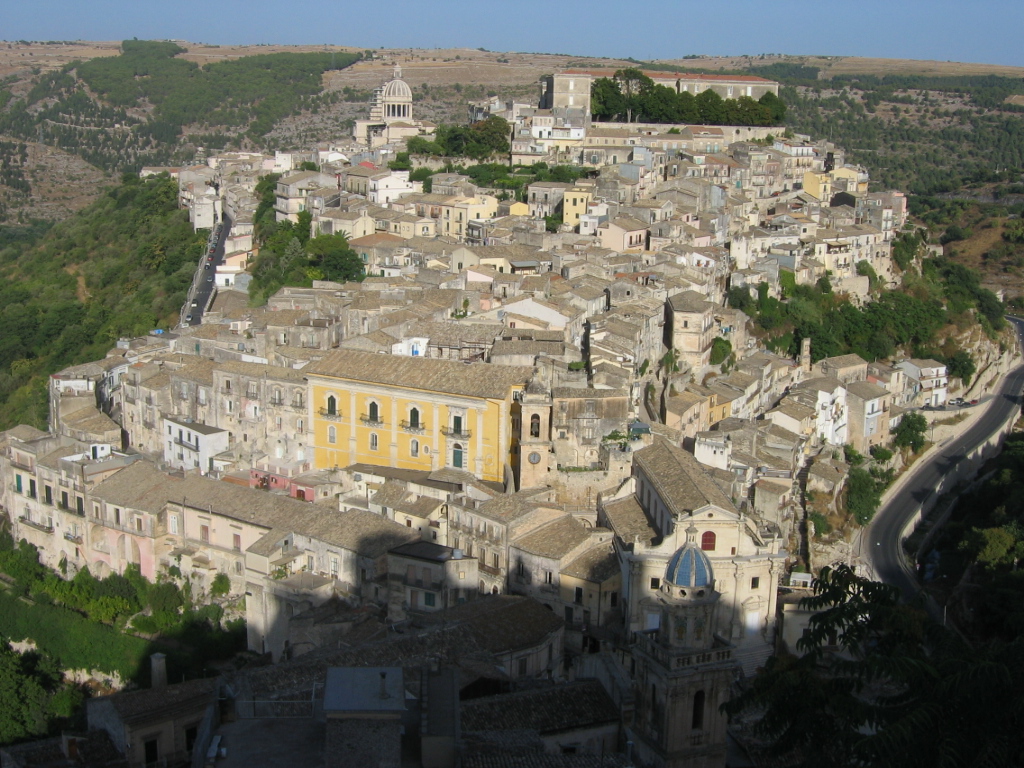
The daily social structure
In most small Italian comuni, daily social life revolves around a small number of fixed points: the bar, the post office, the piazza, and the church. These are not simply commercial or civic venues; in a settlement of 1,500–4,000 people, each one functions as an informal information exchange. In the absence of a local newspaper (most comuni under 3,000 have none), the morning bar visit serves a communicative function that is difficult to replace with digital equivalents when a significant proportion of the permanent population is over 60.
The bar opens between 6:30 and 7:30 in most small comuni and draws its peak traffic between 7:30 and 9:00, then again between 12:00 and 13:30. Afternoon service runs until 18:00–19:30. Evening socialising in towns without restaurants or dedicated social clubs is limited; in many comuni the bar closes before 21:00.
The piazza as functional space
Italy's piazzas are not predominantly tourist backdrops in small comuni; they are the site of actual daily activity. Market stalls set up on designated days (typically one or two mornings a week, sometimes less frequently in very small comuni). Municipal notices appear on physical boards adjacent to the municipio. In the evenings during summer months, the piazza functions as an outdoor social space — chairs outside the bar, informal gatherings, children using the paved area for cycling.
In winter, the piazza is frequently deserted after dark. Heating costs and shorter days significantly reduce outdoor social activity between October and March in most of central and northern Italy; in southern regions the transition is somewhat later.
Associative and civic life
Italy has a dense network of voluntary associations (associazioni di volontariato), many operating at municipal level. In small comuni, associations frequently perform functions that would be municipal services in larger towns: transporting elderly residents to hospital appointments, maintaining a local museum or archive, organising the annual sagra, managing a communal orchard or garden, or staffing a small fire brigade (distaccamento dei Vigili del Fuoco volontari).
Membership density in associations tends to be higher in small comuni than in large cities, in part because social pressure to participate is more direct. According to a 2021 ISTAT social cohesion survey, comuni under 5,000 reported the highest rates of voluntary association participation by population share of any municipal size category, at approximately 31% of adults aged 25–74.
Political and civic participation
Small comuni in Italy tend to have higher voter turnout in municipal elections than urban centres. In the 2020 Italian municipal elections, comuni under 5,000 reported average turnout of approximately 68%, compared to 54% in comuni over 100,000. The relationship between proximity to elected officials and participation rates has been noted in academic work on Italian municipal governance, including research published by the University of Bologna's Department of Political and Social Sciences.
The mayor (sindaco) of a small comune is typically a local figure known personally to most residents. Access is informal; it is common to stop the mayor on the street to raise a problem. This has practical implications: complaints about road damage, planning issues, or local disputes can be escalated more quickly than in large cities, though resolution depends heavily on the individual and the comune's budgetary position.
Seasonal calendars: sagre and religious festivals
The sagra — a local festival centred on a specific food product — is one of the most consistent features of social life in Italian comuni across all sizes, but in small comuni it often represents the single most significant communal event of the year. A town of 2,000 may organise a sagra around local mushrooms, chestnuts, lentils, wine, or a regional dish, drawing visitors from surrounding comuni and generating the majority of annual revenue for local bars, restaurants, and voluntary associations.
Religious festivals associated with the local patron saint (festa del patrono) follow a fixed calendar and in many comuni are the occasion for the only procession, fireworks display, and outdoor concert of the year. These events are generally free and organised by the parish in cooperation with the comune. Attendance can exceed the nominal resident population significantly when former residents return from cities for the occasion — a pattern particularly visible in August and during the patron's feast.
Demographics and the age structure
Italy's small comuni are older than the national average, which is itself among the oldest in Europe. ISTAT's 2023 demographic balance reports show that comuni under 5,000 had a median age of 48.2 years, compared to the national median of 46.4. In comuni under 1,000 residents, the median age exceeded 52 in multiple regions.
This has direct social consequences: the pool of adults aged 25–45 — the demographic that typically staffs voluntary associations, runs local businesses, and engages most actively in municipal politics — is structurally smaller than in urban areas. In many comuni, this age cohort is dominated by individuals who were born locally, left for education or work, and returned (often for family reasons or remote work opportunities). Those who did not return are, by definition, not present.
New residents and integration
The category of new arrivals in small Italian comuni includes: Italian nationals relocating from cities (often for retirement, remote work, or lifestyle reasons), EU nationals (notably from Northern Europe and Germany), and non-EU nationals who arrived initially for agricultural or construction work and subsequently established residence. The social integration of each group follows different patterns.
Newcomers who engage with associative life — joining a local voluntary association, attending the sagra, sending children to the local school — typically report faster acceptance than those who maintain visible separation. The timeline for genuine social integration (beyond surface-level acknowledgement) is frequently reported in qualitative Italian rural sociology studies as three to seven years, with significant variation depending on the newcomer's Italian language ability and social effort.
Local language and dialect
Many small comuni, particularly in Calabria, Sicily, Sardinia, Veneto, Lombardy, and Piedmont, retain active local dialects. In some cases — particularly in the linguistic minorities of Friuli-Venezia Giulia, Valle d'Aosta, and South Tyrol — the local language has official recognition and is used in public signage. In others, dialect is an informal register used among long-term residents and within families but not in official contexts.
For newcomers, dialect comprehension is rarely essential to daily functioning — standard Italian is understood by all residents — but its social signalling function is real. A newcomer who learns a few phrases of local dialect is demonstrating cultural investment, which is noted.
Sources
- ISTAT – Social Cohesion Survey 2021, Demographic Balance Reports 2023
- Italian Ministry of the Interior – municipal election results
- University of Bologna, Department of Political and Social Sciences – published research on Italian municipal participation (available via institutional repository)